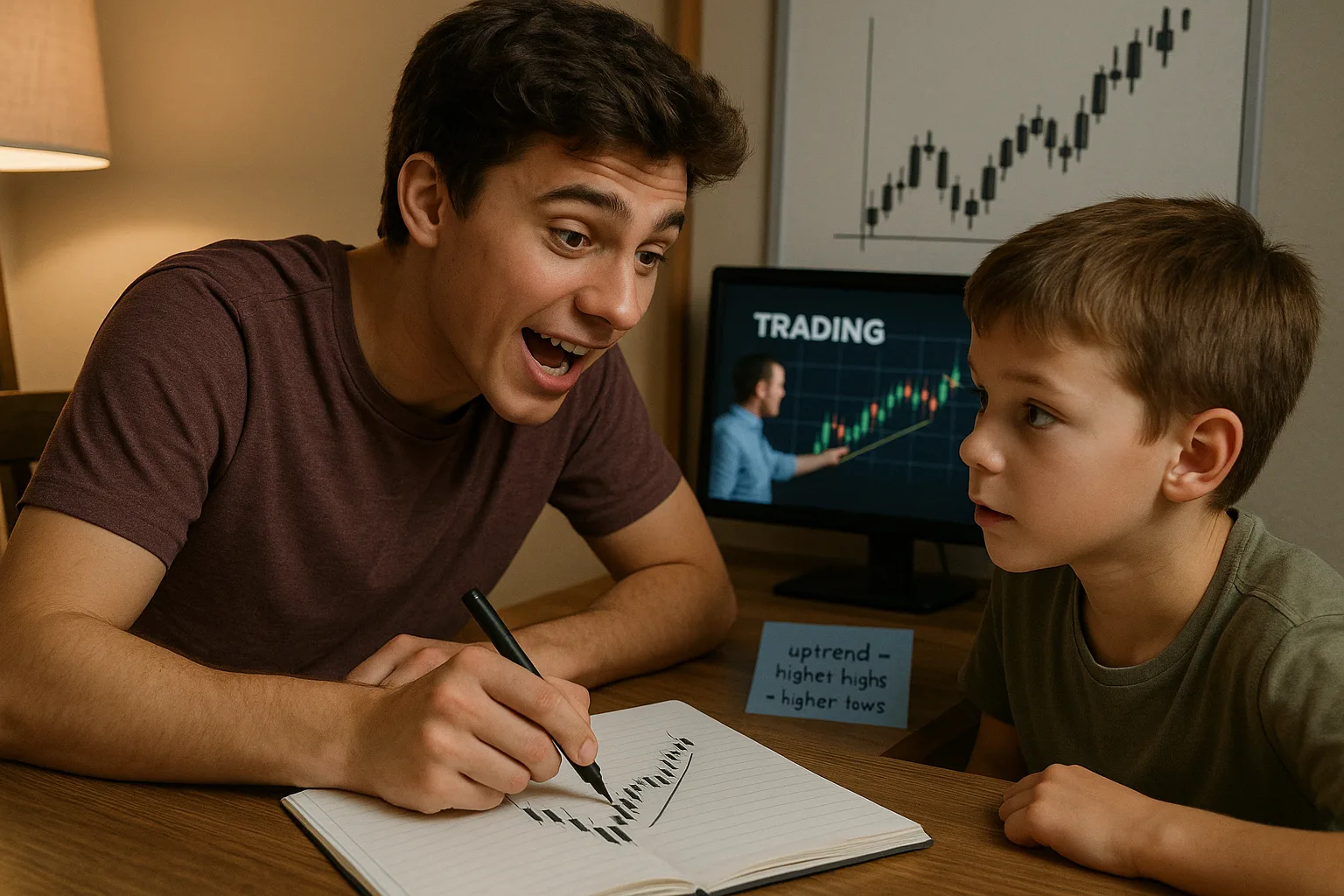
Trading Education in Irkutsk: How to Choose Courses, Tools, and Strategies for Stocks, Crypto, and More
Introduction
Irkutsk traders — whether you’re a student at a local university, a working professional, or someone exploring supplemental income streams — face the same central question: how to learn trading efficiently and safely. This guide compares the main types of trading education (courses, schools, online programs), the tools and platforms you’ll use, and the psychological and practical skills that separate hobbyists from consistent market participants. It also gives a clear local perspective for Irkutsk residents: where to start, what to look for, and how to avoid common pitfalls.
The local learning landscape (Irkutsk)
— Universities, business faculties, and continuing-education centers sometimes run finance and investment modules — a good theoretical base.
— Local meetups, coworking spaces, and private seminars appear periodically — useful for networking and live Q&A.
— Most practical trading education now happens online; Russian-language platforms and global providers both serve Irkutsk traders.
— Regulators and tax authorities in Russia require awareness of reporting and compliance — factor this into any practical trading plan.
Types of trading education: pros and cons
— University courses and formal programs
— Pros: structured curriculum, academic credibility, theory (economics, statistics).
— Cons: slower pace, less hands‑on market practice.
— Private trading schools and bootcamps
— Pros: practical, mentor-led, often shorter and skills-focused.
— Cons: widely varying quality; vet instructors carefully.
— Online self-paced courses (Udemy, Coursera, Binance Academy, Investopedia)
— Pros: affordable, broad choice, learn at own pace.
— Cons: requires discipline; variable depth and instructor accountability.
— Live mentoring and signal services
— Pros: tailored guidance, real-time feedback.
— Cons: expensive; risk of dependency or low-quality signal providers.
— Community learning (meetups, peer groups)
— Pros: peer support, local networking, shared resources.
— Cons: inconsistent curricula and expertise.
What a good trading course should teach
— Market fundamentals: how exchanges, order books, and liquidity work (for stocks, crypto, FX).
— Instruments: stocks, ETFs, crypto, derivatives — characteristics and risks.
— Technical analysis: chart reading, trend identification, volume, indicators — used as tools, not guarantees.
— Fundamental analysis: company financials, macro drivers, tokenomics (for crypto).
— Risk and money management: position sizing, max loss, diversification.
— Trading psychology: bias, emotional control, journaling and routine.
— Backtesting and simulators: how to test strategies on historical data.
— Platform mechanics and order types: market, limit, stop-loss, margin mechanics.
— Legal & tax basics: local reporting requirements, KYC implications for exchanges/brokers.
Key platforms and tools to learn and use (accessible in Irkutsk)
— Charting & analysis: TradingView (Russian interface), local broker platforms (e.g., QUIK via Moscow Exchange clients).
— Retail trading terminals: MetaTrader 4/5 (FX), broker apps like Tinkoff Investments, BCS, Finam (educational sections vary).
— Crypto exchanges & learning: Binance Academy, Huobi, OKX — check availability and local access.
— Simulators and paper trading: TradingView paper trading, broker demo accounts, MT4/MT5 demo servers.
— Order execution and research: broker platforms with regulatory standing in Russia or internationally (choose based on accessibility and compliance).
— News & research: professional newsfeeds, local business media, and global outlets; use aggregated alerts.
Comparing course types — a quick checklist
When evaluating any course, ask:
— Who is the instructor? Can they show verifiable trading or teaching results?
— Is there a clear curriculum and learning outcomes?
— Are practical exercises, simulators, or live trading labs included?
— Is risk management and psychology part of the program, not an afterthought?
— Is there ongoing support (mentorship, community, Q&A sessions) after the course ends?
— What are the refund, trial, and complaint procedures?
— Are reviews and third-party testimonials available (independent sources preferable)?
Typical pitfalls and red flags
— Guaranteed returns or “secret” strategies — avoid any promise of fixed profits.
— High-pressure upsells: advanced packages that appear necessary to succeed.
— Lack of transparency about instructor credentials or trade proof.
— Overemphasis on indicators without risk control or psychology.
— Paid signal services with opaque track records.
Learning pathway for an Irkutsk trader (recommended roadmap)
1. Basics: Start with free resources — Investopedia, Binance Academy (Russian), TradingView tutorials.
2. Theory: Take a structured course (university module or a reputable online class) to learn markets and instruments.
3. Practice: Open demo accounts on TradingView, MT5, or your broker to paper trade for several months.
4. Specialized study: Choose a focus (stocks, crypto, FX) and learn strategy frameworks (trend following, swing, mean reversion).
5. Psychology & discipline: Keep a trade journal, set rules for risk per trade, and review mistakes